With most plants the question is which organ. With Kapikacchu it is also which layer.
Pod and seed
The pod carries the fine hairs that irritate skin. The seed sits inside it, protected, which is what Atmagupta records. The seed is the material the tradition uses.
Why processing matters here
Separating seed from pod is not incidental with this plant; it is the whole of safe handling. A preparation naming Kapikacchu is understood to mean the seed.
Beeja, the seed
The Sanskrit for seed is Beeja, one of the part-words that runs alongside Mula for root and Twak for bark, which the Twak guide sets out.
On the label
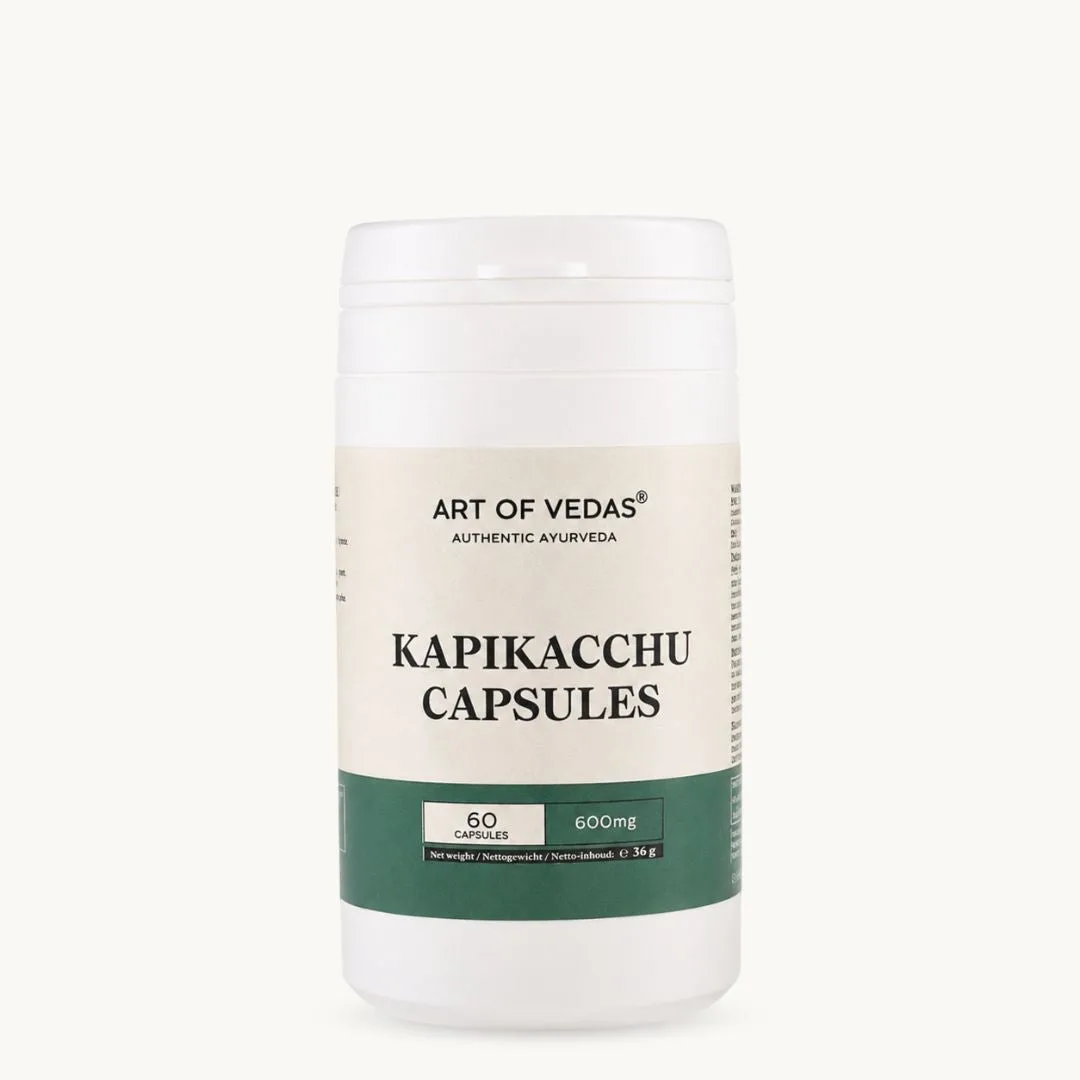
Kapikacchu Capsules state Mucuna pruriens and the part, because species alone would not distinguish seed from pod.
Frequently Asked Questions
Which part of Kapikacchu is used?
The seed.
Is the pod used?
No. The pod carries the irritant hairs.
What is Beeja?
The Sanskrit for seed.
This article is for educational purposes and describes the classical Ayurvedic record. The products mentioned are food supplements, not a substitute for a varied, balanced diet, and are not intended to diagnose, treat, cure or prevent any disease. Take them under the guidance of a qualified Ayurvedic practitioner.